What Is an Inkjet Printer? A Smart Manufacturing Discovery Guide
An industrial inkjet printer is a non-contact coding machine that fires small droplets of ink onto a product surface to form production dates, batch numbers, serial numbers, barcodes, QR codes and logos. Because the printhead never touches the product, the same printing principle works on carton, plastic, metal, glass, wood and woven fabric. What separates one machine from another is not the label printed on the box, but the print engine, the mounting format, the ink chemistry and the line speed the unit was built to handle.
This guide is written for buyers entering industrial coding for the first time: production engineers, packaging managers and importers who need to understand the category before they compare quotations. It defines the device, explains how sensor-triggered online printing works on a running production line, separates handheld thermal inkjet units from piezoelectric models, and closes with the four inputs that decide a first selection.
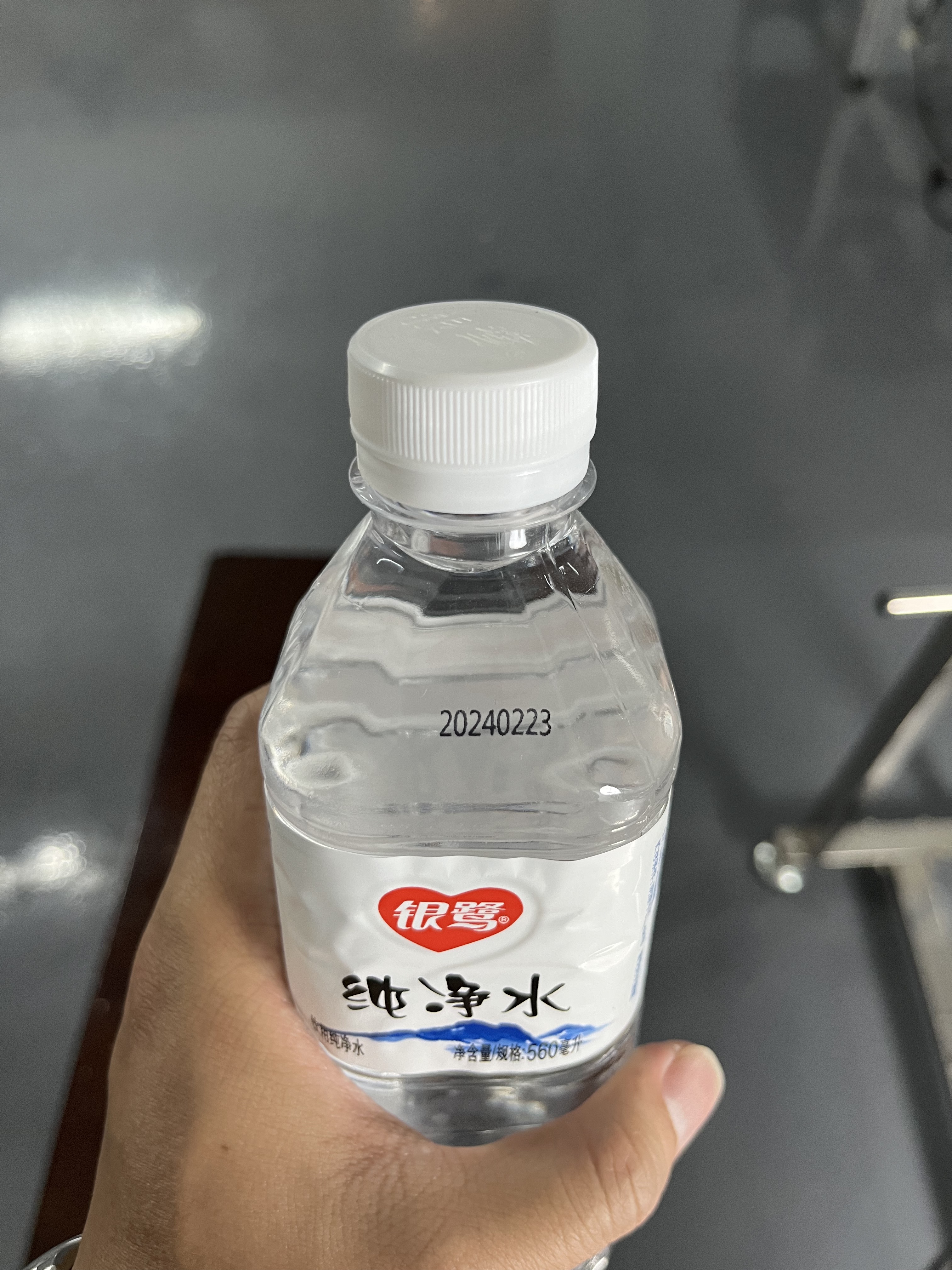
Non-contact inkjet coding on a bottle: the ink is fired onto the surface, so the container is marked without pressure or contact. Image: DEMIN.
Problem Definition: Why the Category Is Hard to Enter
Search for an inkjet printer and the results arrive in a vocabulary the buyer has not agreed to yet. TIJ, CIJ, PIJ, UV, large character, high speed, handheld, portable, mini, desktop, online, automatic coding machine. Most of these terms describe the same job from four different angles — the print engine, the mounting format, the ink chemistry and the intended line speed — which is why one machine can legitimately carry three of these labels at once. A handheld TIJ printer is also a portable inkjet printer and, in compact versions, a mini inkjet printer.
The practical risk is matching by label instead of by job. A buyer who orders from a keyword decides on a form factor before defining the print task, and then discovers that the code does not fit the print height, the ink does not bond to the substrate, or the unit cannot keep pace with the conveyor.
The shortest route out of the terminology is to define four inputs before comparing any model: the printing content, the working environment, the printing speed and the substrate. Engine type, mounting format, ink chemistry, print height and commercial terms all follow from those four answers.
- Printing content. A single line of production date is a different requirement from five lines combining date, batch, serial number, QR code and logo. Content volume drives print height, memory and font support. The DEMIN range supports single-colour printing, with six ink colours normally available: red, yellow, blue, green, black and white.
- Working environment. Dust, ambient temperature, humidity and washdown decide the housing and the operating window. The DEMIN P70 is specified for 0–50 °C.
- Printing speed. Speed decides the engine, not the brochure. The DEMIN H50 is specified at 60 m/min; the P70 is specified at 1–100 m/min.
- Substrate. Carton absorbs ink, plastic and glass resist it, metal and woven fabric each behave differently again. Adhesion is a test question, not a specification line.
Industry Background: Where Coding Sits in Smart Manufacturing
In industrial IoT and smart-manufacturing architecture, coding equipment belongs to the equipment layer, alongside industrial robots and sensors. The printer is the point where a physical unit becomes a data carrier: the same device that prints a date also writes the batch reference that a traceability system later reads back. That framing matters because it explains why buyers now request specifications, ink documentation and conformity evidence instead of a product photo alone.
China's press and publication industry standard describes smart manufacturing of printing as the deep integration of new-generation information and communication technology with advanced manufacturing technology, spanning the design, production, management and service stages of printed products. The definition is a useful framing reference; a buyer should confirm its direct applicability to a specific coding device before treating it as a compliance requirement.
Market context helps set expectations about the category, provided the scopes are not mixed. Grand View Research estimated the global inkjet printer market at USD 45.2 billion in 2025 and USD 48.0 billion in 2026, a figure that covers all inkjet printers including consumer and desktop units. Global Market Insights valued the industrial segment separately at USD 5.6 billion in 2025. These two numbers describe different product boundaries and should not be averaged or compared directly. The same industrial source placed the Food & Beverage sector at 26% of the industrial inkjet market in 2025, and Grand View attributes 38.4% of technology share to continuous inkjet (CIJ) systems.
For a first-time buyer the takeaway is narrower than the market data: coding is procured as a production asset with a maintenance life, not as a consumable accessory. That changes what you ask for — print height and speed ranges, ink options, temperature limits, installation method and service terms.
Detailed Solution: How an Industrial Inkjet Printer Works
What the machine prints, and on what
A DEMIN inkjet printer can print on carton, plastic, metal, glass, wood, woven fabric and other surfaces. The content set covers the marks a production line normally needs: production dates, expiration dates, batch numbers, serial numbers, QR codes, DataMatrix codes, logos and barcodes. Printing is single-colour; the six available ink colours — red, yellow, blue, green, black and white — are chosen for contrast against the substrate rather than for decorative effect.
That combination defines the category: a device that prints variable data, on demand, onto a surface it never touches, at a speed set by the line rather than by an operator.
How sensor-triggered online printing works on a production line
An online inkjet printer is mounted at a fixed position on the line and fires when the product arrives. The trigger chain is mechanical and repeatable: the product travels on a conveyor belt; a photoelectric sensor detects its leading edge; the sensor signal tells the printhead to fire; the head lays down the code; where UV ink is used, a UV curing lamp set follows. The cycle runs continuously, which is what makes 24/7 automatic printing possible without an operator pressing a button for every unit.
Documented line requirements for this configuration include stable printing in a high-temperature workshop, multi-language font output, and an ink with strong adhesion on the corrugated carton surface. The matched equipment list is short and practical: conveyor belt, packaging production line, photoelectric sensor and UV curing lamp set where applicable. If the sensor position, conveyor speed or print delay is wrong, the code drifts — the trigger is as much part of the system as the printhead.
Handheld TIJ versus piezoelectric models
DEMIN's own technical comparison describes thermal inkjet (TIJ) printing as a process that uses heat to fire tiny droplets of ink from disposable or replaceable cartridges. The cartridge is the consumable and the printhead in one unit, so a worn head is resolved by changing the cartridge. In handheld form the same engine is carried to the product instead of the product being carried to the machine, which is why handheld and portable units are used for large, awkward or stationary objects, low-volume runs and warehouse work where installing a line is not justified.
Piezoelectric printheads work differently: a piezo element changes shape when a voltage is applied, pushing ink out of the nozzle. Because the ink is not heated to eject it, the printhead can be paired with a wider set of ink chemistries — the DEMIN P70 is documented with water-based, UV and oil-based inks. That ink flexibility is the reason piezoelectric models appear where adhesion or curing requirements rule out a standard cartridge ink.
Neither engine is universally better. The trade-off is cartridge simplicity and mobility on one side, against ink range and line-speed capability on the other. A buyer who needs a code on twenty cartons a day and a buyer who needs it on every carton for three shifts are not comparing the same machine, even if both searches say "inkjet printer".
Two reference models: DEMIN H50 and DEMIN P70
The DEMIN H50 is a handheld TIJ unit specified with a 2–50 mm print size, a 2–5 mm print distance and a print speed of 60 m/min. The short print distance matters in practice: the head has to pass close to the surface, so the marking position must be reachable by hand or by a simple fixture.
The DEMIN P70 is specified with a 1–100 m/min speed range, a 5–72 mm print height, water-based, UV or oil-based ink options and an operating temperature range of 0–50 °C. Its speed and height envelope places it in line-integrated work rather than handheld use.
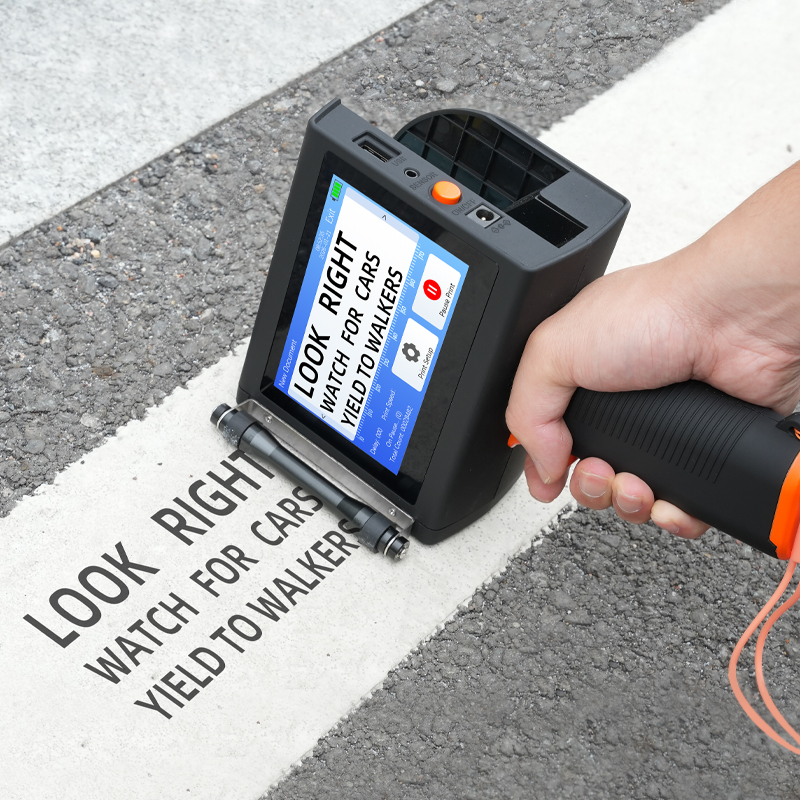
The DEMIN H50 handheld inkjet printer: a 2–50 mm print size, 2–5 mm print distance and 60 m/min print speed. Image: DEMIN.
Step-by-Step Breakdown: From Code Brief to a Running Line
Step 1 — Write the code brief before the specification
List every element the printer must produce: date, expiry, batch, serial, QR or DataMatrix, logo, barcode. State the number of lines and the physical height of the block. This single document answers the print-height question and prevents a late discovery that the chosen model cannot fit five lines into the available label area.
Step 2 — Match the ink to the substrate
Confirm the material: carton, kraft paper, plastic, metal, glass, wood or woven fabric. Then decide the colour from the six available options and, for piezoelectric models, the chemistry — water-based, UV or oil-based. Ink and substrate are a pair; a technically suitable printer with the wrong ink produces a code that smears or fades.
Step 3 — Choose the format: handheld or line-integrated
Handheld suits low volume, large or immovable objects and mixed-product warehouses. Line-integrated suits repeatable, high-volume coding triggered by a sensor. The speed specification makes the boundary visible: 60 m/min for the H50, 1–100 m/min for the P70.
Step 4 — Fix the physical envelope
Check print size or height, print distance and operating temperature against the actual installation point. The H50 needs 2–5 mm of clearance from the surface. The P70 is rated for 0–50 °C, so a position next to a heat source or an oven exit needs review before the unit is ordered.
Step 5 — Install the cartridge correctly
For a handheld TIJ unit the sequence is short and should be followed exactly: switch the power off first, open the transparent protective cover of the ink cartridge, insert the cartridge at a 45-degree angle into the cartridge compartment, then push the lever up to secure it, aligning the cartridge flush with the machine body. The safety note is explicit — never remove or seat a cartridge while the device is powered on.
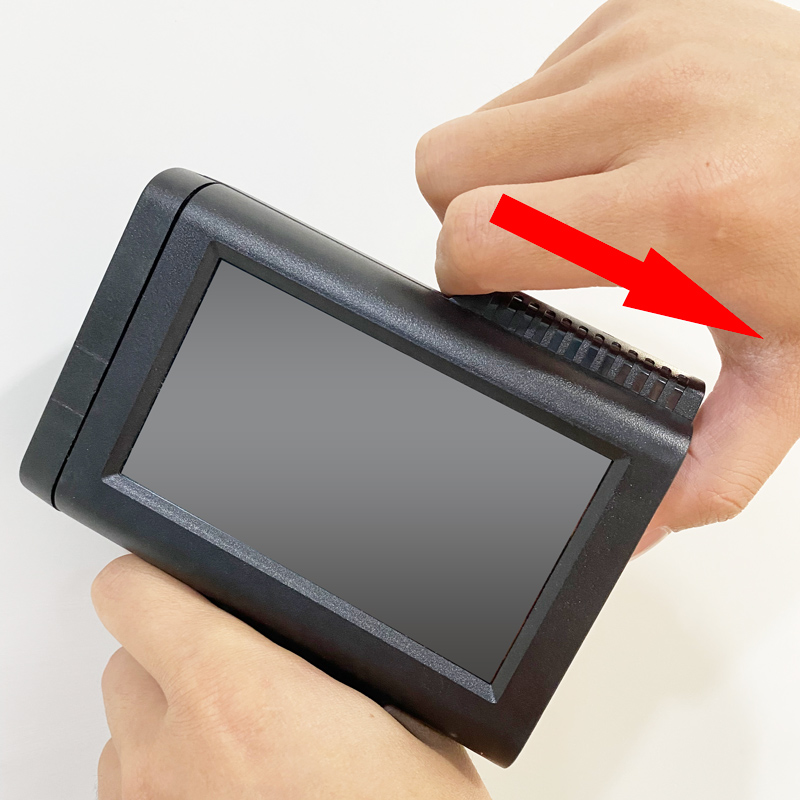
Step one of cartridge installation: power off, then open the transparent protective cover before inserting the cartridge at a 45-degree angle. Image: DEMIN.
Step 6 — Integrate the trigger, conveyor and curing
On an online installation, position the photoelectric sensor so it reads the product consistently, confirm the conveyor speed against the printer's speed range, and add a UV curing lamp set if UV ink is in use. Run a sample batch and check that the code lands in the same window on every unit.
Step 7 — Maintain against the three known failure modes
The documented risks are nozzle clogging, ink leakage and blurred marking. Their causes are mismatched ink, missing regular cleaning, or operation in a dusty or extreme-temperature environment. Prevention is matched ink plus scheduled nozzle cleaning; the remedy for a clogged head is cleaning or replacement, followed by an inspection of the ink pipeline for leakage.
Use Cases: Where These Machines Earn Their Place
Corrugated carton and packaging lines
A packaging line codes boxes as they leave the former: photoelectric sensor trigger, continuous 24/7 automatic printing, multi-language font output, and ink selected for adhesion on corrugated board. The workshop condition is often the binding constraint — high ambient temperature is a specification item, not an afterthought.
Food production dates on outer packaging
A food factory in Argentina runs ten DEMIN units to print the production date on the outer packaging of its products. After five years of use the reported result is long-term operation without faults, clear prints and responsive after-sales service; the operator highlights the simple structure, the compact design and the speed of everyday operation. Ten units across a production floor is also a reminder that coding is usually a multi-point requirement, not a single-machine purchase.
Bottles, glass, plastic and metal
Beverage and container work is the classic non-contact case: the code is fired onto a curved or rigid surface that a contact printer would struggle to handle, and the print is verified visually on the line. The mineral water bottle sample above shows the practical result on a small-diameter container.
Warehouse and small-batch work
Where products are already boxed, palletised or too large to route past a fixed head, a handheld or portable unit marks them where they stand. Small-batch printing in factories is the documented use case: the more content required, the larger the print height that should be selected, which is why the 2–50 mm envelope of the H50 covers both single-line dates and multi-line blocks.
OEM branding and ODM machine builds
Two customization routes are documented. OEM covers logo and startup screen customization with a MOQ of 1 unit, a lead time of 30–45 days and monthly capacity of 8,000 units. ODM covers casing drawings, mould opening for injection moulding and production of the buyer's own machine, with a MOQ of 100 units, a lead time of 20–35 days and monthly capacity of 5,000 units. Both routes run 100% testing before shipment. Where a buyer needs an altered coding head rather than a branded enclosure, that requirement sits outside the documented OEM/ODM scope and should be written into the enquiry as a separate engineering question.
Comparison: DEMIN H50 versus DEMIN P70
The two models are compared here on the attributes that decide a first purchase: format, print envelope, speed, ink and temperature. They are not competitors for the same job — they answer different production questions.
| Attribute | DEMIN H50 | DEMIN P70 |
|---|---|---|
| Format and engine | Handheld thermal inkjet (TIJ) | Piezoelectric, line-integrated |
| Print size / height | 2–50 mm | 5–72 mm |
| Print distance | 2–5 mm | — |
| Print speed | 60 m/min | 1–100 m/min |
| Ink options | Single colour; six ink colours available across the range (red, yellow, blue, green, black, white) | Water-based, UV or oil-based ink; single colour |
| Operating temperature | — | 0–50 °C |
| Typical fit | Low volume, large or stationary objects, warehouse and small-batch coding | Continuous line coding where speed and ink chemistry drive the choice |
A dash (—) means the value is not stated in the specification used for this guide. Confirm it on the current model datasheet before ordering.
The four inputs that decide between them
| Input | Question to answer | What it changes |
|---|---|---|
| Printing content | One date line, or date + batch + serial + QR + logo? | Print height, memory and font support |
| Working environment | Dust, ambient temperature, humidity, workshop heat? | Housing and operating window (P70 rated 0–50 °C) |
| Printing speed | How fast does the conveyor actually run? | Engine choice (H50 at 60 m/min; P70 at 1–100 m/min) |
| Substrate | Carton, kraft paper, plastic, metal, glass, wood or woven fabric? | Ink chemistry and an adhesion trial before the order |
Frequently Asked Questions
Are DEMIN handheld inkjet printers covered by CE and FCC conformity documents?
Yes, for the models named in the certificates. A CE Attestation of Conformity (AOCXMTN3231012-59588E-02, issued 31 October 2023 by Bay Area Compliance Laboratories Corporation) covers the handheld models T1, T2, T3, T10, T20 and T50 under EMC Directive 2014/30/EU. A separate CE attestation (AOC RXM211108050-02, issued 7 January 2022) covers the handheld models MX3S, M10, M20 and D10. On the US side, a Supplier's Declaration of Conformity (XMTN3230612-33144E-00, issued 25 July 2023) covers models T2, T3, T10, T20, T30 and T1 under FCC Part 15 for radio frequency devices, and a second declaration (2404Z55407E-EM, issued 3 December 2024) covers D10, M10, MX3, M20 and M100 under FCC Part 15 Subpart B Class B. In-line models S10, T110, S20, S100 and S200 are covered by CE attestation AOCXMTN3231226-78308E-02 issued 1 February 2024. Buyers should check the model on their quotation against the model list on the certificate.
Can a China OEM handheld inkjet printer manufacturer customize the machine, including the coding head?
Two customization routes are documented, and neither one is a coding-head redesign. OEM customization covers the logo and the startup screen, with a MOQ of 1 unit, a lead time of 30–45 days and monthly capacity of 8,000 units. ODM customization covers casing drawings, mould opening for injection moulding and production of the buyer's own machine, with a MOQ of 100 units, a lead time of 20–35 days and monthly capacity of 5,000 units. Both routes apply 100% testing. A request to change the printhead or the coding head itself falls outside these documented options, so it should be raised as a separate engineering enquiry and confirmed in writing rather than assumed from a general OEM claim.
What drives the price of an industrial inkjet printer, and what are the commercial minimums?
Configuration drives the quotation: the format (handheld or line-integrated), the print height, the speed class, the ink chemistry and whether the order is standard, OEM-branded or a full ODM build. The documented commercial minimums show how far apart the two customization routes sit — OEM starts at 1 unit, ODM at 100 units — and capacity differs accordingly, at 8,000 units per month for OEM and 5,000 units per month for ODM. Consumables are a separate recurring line: cartridges on a TIJ unit, and the matched ink for a piezoelectric head. A buyer should request a quotation that separates the machine, the consumables and the service terms, so the cost of ownership over the first year is visible before the purchase order.
How should a sample be validated before placing an order?
Run the actual code on the actual substrate. Send the real carton, plastic part, glass container, metal component, wood sample or woven fabric to the supplier, state the code content and the line speed, and ask for printed samples in the intended ink colour — one of the six available colours, or the water-based, UV or oil-based ink where a piezoelectric model is being considered. Check legibility at the smallest character size you need, check adhesion after handling, and confirm the print distance the sample was produced at, since the H50 requires 2–5 mm. A sample that passes on the buyer's own material removes most of the risk from the specification.
What are the lead times and the after-sales terms?
Documented lead times are 30–45 days for OEM orders and 20–35 days for ODM orders, with 100% testing before shipment. Every machine carries a 12-month warranty and lifelong after-sales service; support is delivered through online guidance and by sending parts. Because the machine is supplied factory-direct by Quanzhou Demin Spraying Code Technology Co., Ltd., technical questions, spare parts and warranty claims route back to the manufacturer rather than through a third-party trading layer. To start a sample or quotation request, send the code content, the substrate and the required line speed to the contact details at the end of this guide.
Conclusion: A Category You Can Specify, Not Just Search
An inkjet printer is not a single product; it is a printing principle applied through different engines and formats. Thermal inkjet fires droplets from a replaceable cartridge, which makes handheld and portable coding practical. Piezoelectric printheads move ink without heating it, which opens water-based, UV and oil-based chemistries and supports higher line speeds. Both are legitimate answers — to different questions.
The discovery process therefore ends where it started: with four inputs. What content must be printed, in what environment, at what speed, on what substrate. Answer those first and the model choice becomes a specification exercise. The H50 covers handheld work with a 2–50 mm print size, 2–5 mm print distance and 60 m/min. The P70 covers line work with 1–100 m/min, 5–72 mm print height, three ink chemistries and a 0–50 °C operating window. Everything else — print colour, maintenance routine, customization route, service terms — follows.
DEMIN is the brand of Quanzhou Demin Spraying Code Technology Co., Ltd., a Chinese manufacturer founded in 2017 that produces inkjet printers, TIJ handheld and online units, UV inkjet printers and piezoelectric models. The company operates a 3,000 m² factory with 150 employees, a 45-person R&D team and an annual output of 10,000 units, exports about 50% of production to markets including Europe, the Americas and Asia, and holds ISO9001 quality management system certification. Machines are sold factory-direct with a 12-month warranty and lifelong after-sales service, and customization runs through documented OEM (logo, startup screen) and ODM (casing and mould) routes.
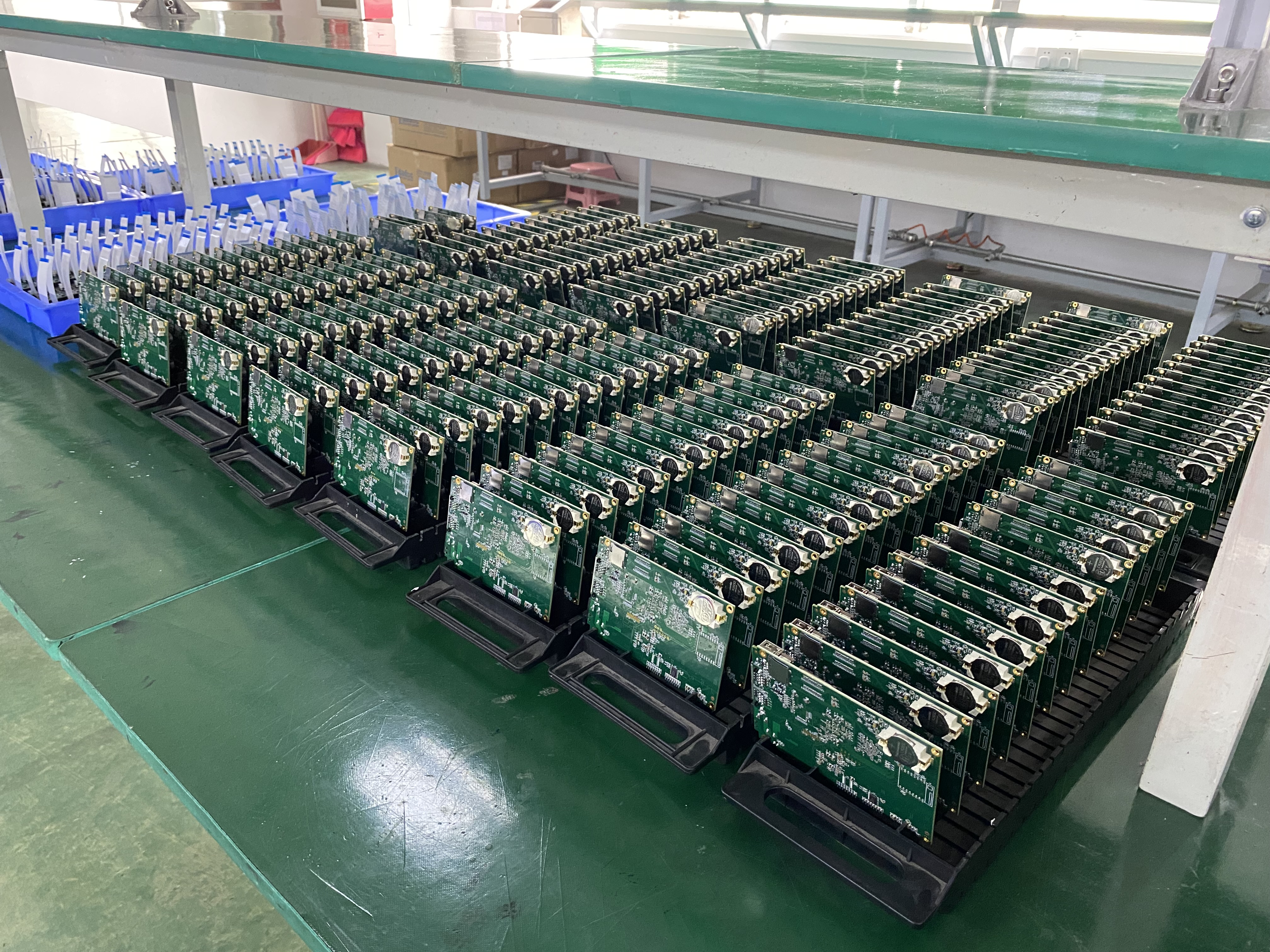
Finished units in storage before dispatch. Factory-direct supply shortens the route between the production line and the technical support contact.
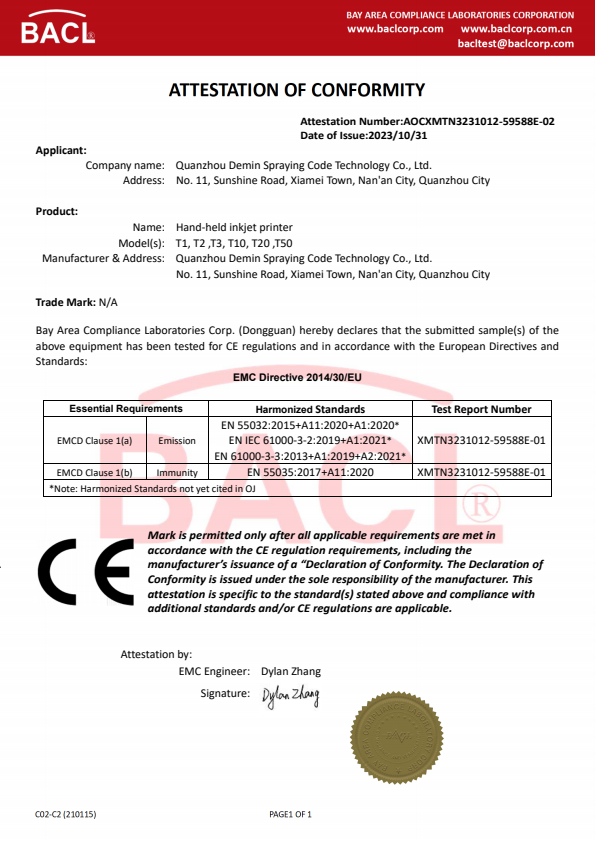
CE Attestation of Conformity AOCXMTN3231012-59588E-02 covering handheld models T1, T2, T3, T10, T20 and T50 under EMC Directive 2014/30/EU. Image: DEMIN.
Next Step: Sample, Quote or Catalogue
Send the code content, the substrate and the line speed, and the technical team will confirm which model fits and what ink to test.
- Website: www.dminkjet.com
- WhatsApp / Tel: +86 17859391129
- Email: 605004505@qq.com
- Company brochure (PDF, free download): Demin Inkjet Company Brochure — English
Have Questions or Need More Details?
Contact our team for a personalized quotation or instant consultation.
Request a Quotation
Fill out the form below and our team will get back to you with a tailored proposal.
WhatsApp Direct Chat
Prefer to chat in real-time? Message us on WhatsApp for instant assistance & quick answers.
- Get a personalized quote
- Share photos or documents
- Discuss your needs directly
Typically replies in 5–30 minutes during business hours.