Supplier Evaluation for Inkjet Printer Delivery Assurance: Factory, Warranty and R&D Checks
Supplier evaluation guide · industrial inkjet printer
Supplier Evaluation for Inkjet Printer Delivery Assurance: Factory, Warranty and R&D Checks
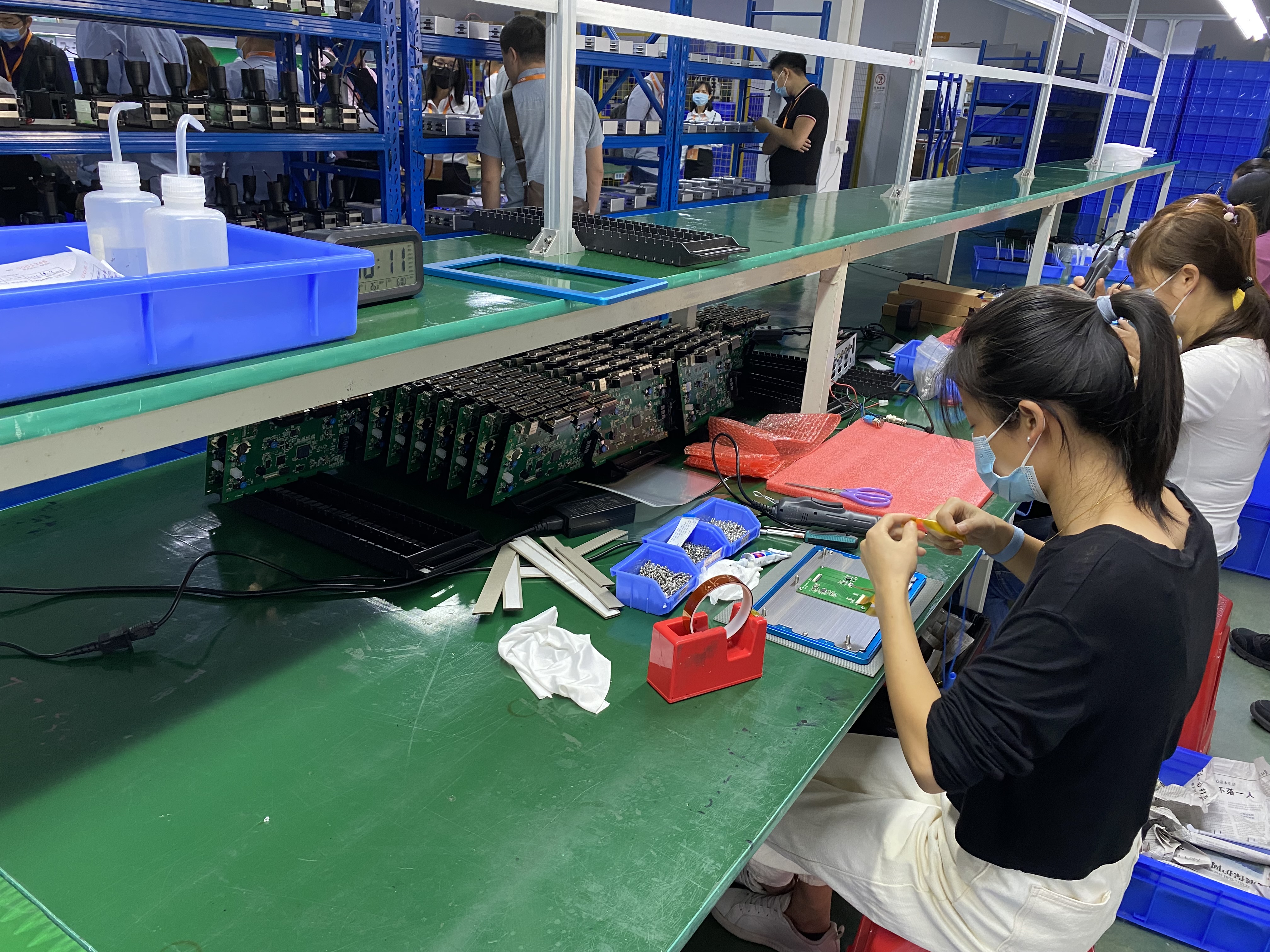
Delivery assurance for an industrial inkjet printer is decided by four checks that a buyer can verify before the purchase order: whether the supplier manufactures in its own factory, whether its model range is documented at model level, what the warranty and after-sales commitment actually covers, and whether an in-house R&D team can support the equipment across a multi-year supply agreement. DEMIN Inkjet Printer — the brand of Quanzhou Demin Spraying Code Technology Co., Ltd., a coding-equipment manufacturer operating since 2017 — publishes evidence for all four: a 3,000 m² factory with 150 employees and an annual output of 10,000 units, six documented models (H50, M10, S10, L10, P70 and P70 Pro), a 12-month warranty with lifelong after-sales service, and a 45-person R&D team.
This article is written for procurement teams and technical buyers in the research and early evaluation stage, where the goal is not yet to choose a model but to decide which suppliers deserve a specification request at all. It sets out a verification framework, the documents that support each check, and the warning signs that separate a manufacturer from a reseller.
Why Inkjet Printer Delivery Problems Start at Supplier Selection
An inkjet printer that produces a clean date code in a showroom can still fail as a supply decision. In industrial coding, the failures that stop a packaging line are rarely printing defects; they are supplier-structure defects that only become visible after the purchase order is issued. Three patterns account for most of them.
- A reseller layer between the buyer and the production line. When the seller does not build the machine, build schedules, quality control and spare-part availability sit outside its control. The buyer discovers this at the first delay, not during negotiation.
- Model claims without model-level documentation. A supplier lists handheld, online and UV categories but cannot produce print height, speed, resolution or interface data for the exact unit quoted. Specification gaps surface at commissioning, when the print height is too small for the carton or the interface does not match the line PLC.
- A warranty without a service path. A stated warranty period with no named contact, no defined coverage and no consumable continuity plan transfers risk back to the buyer at the moment of failure.
Each of these problems is detectable before the order is placed. The purpose of a supplier evaluation is to make them visible while switching suppliers is still inexpensive.
Where the Printer Sits: Delivery Risk Inside a Production Line
Inkjet coding equipment belongs to the equipment layer of a smart-manufacturing line. It is typically triggered by sensors, mounted on a conveyor and connected to production systems rather than operated as a standalone device. Global Market Insights values the industrial inkjet printer segment at USD 5.6 billion in 2025 and reports that food and beverage accounts for 26% of end-user demand for these systems.
That demand mix shapes how suppliers should be evaluated. When a printer codes cartons, films or labels inside a food, beverage or packaging operation, the machine sits inline with the production flow, so a stoppage is a line problem rather than a printer problem. Buyers therefore weigh continuity — installation support, interface compatibility, spare parts and technical response — alongside unit specification.
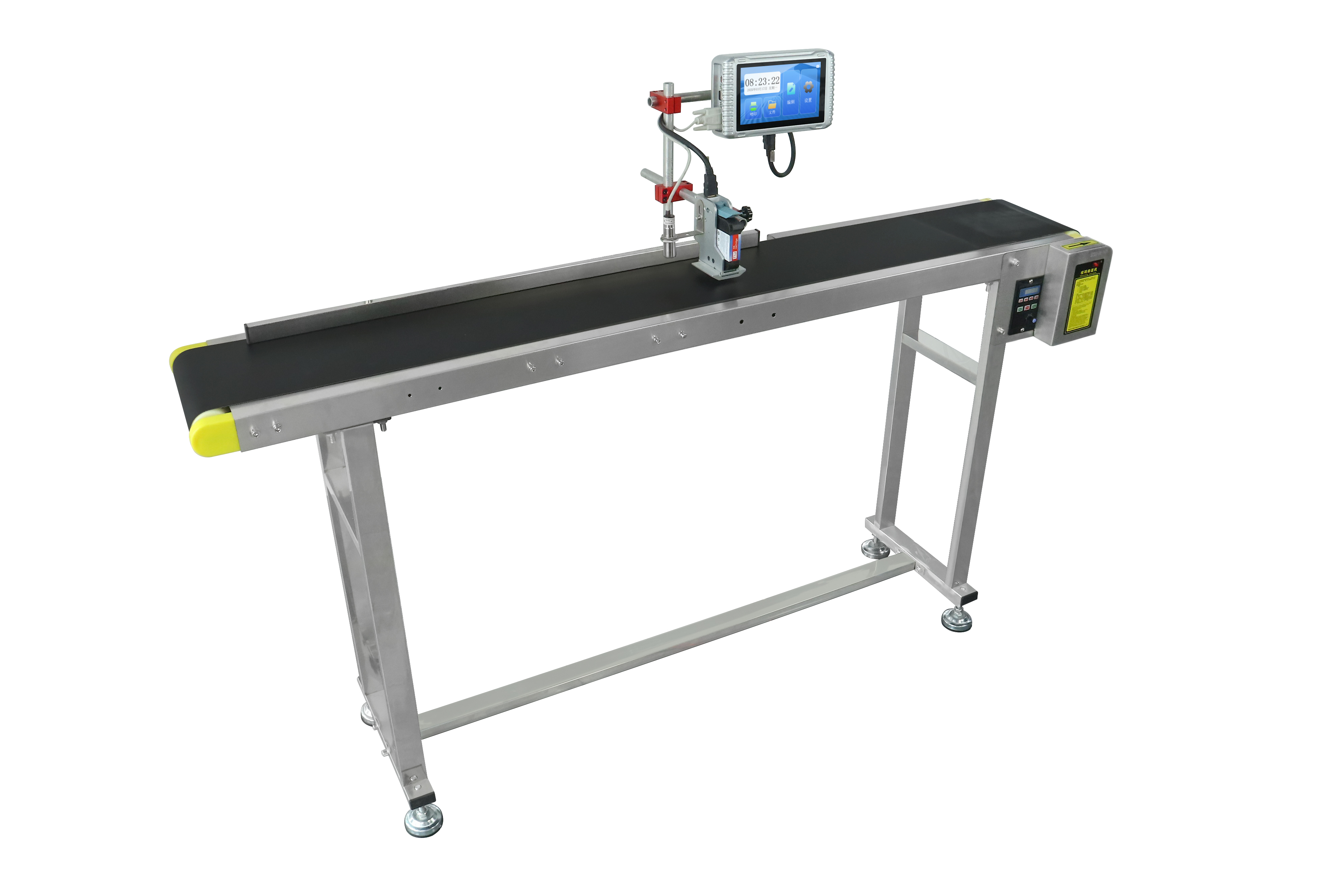
A documented carton-packaging configuration shows the pattern clearly: a photoelectric sensor triggers the printer, the unit runs continuous online automatic printing on a conveyor and packaging line on a 24/7 basis, a UV curing lamp set forms part of the installation, and the workshop environment is high-temperature with multi-language font output and high-adhesion ink required for corrugated board. Every element in that description is a delivery-assurance variable, not a catalogue feature.
The Four Checks That Predict Delivery Performance
Check 1 — In-House Factory Status
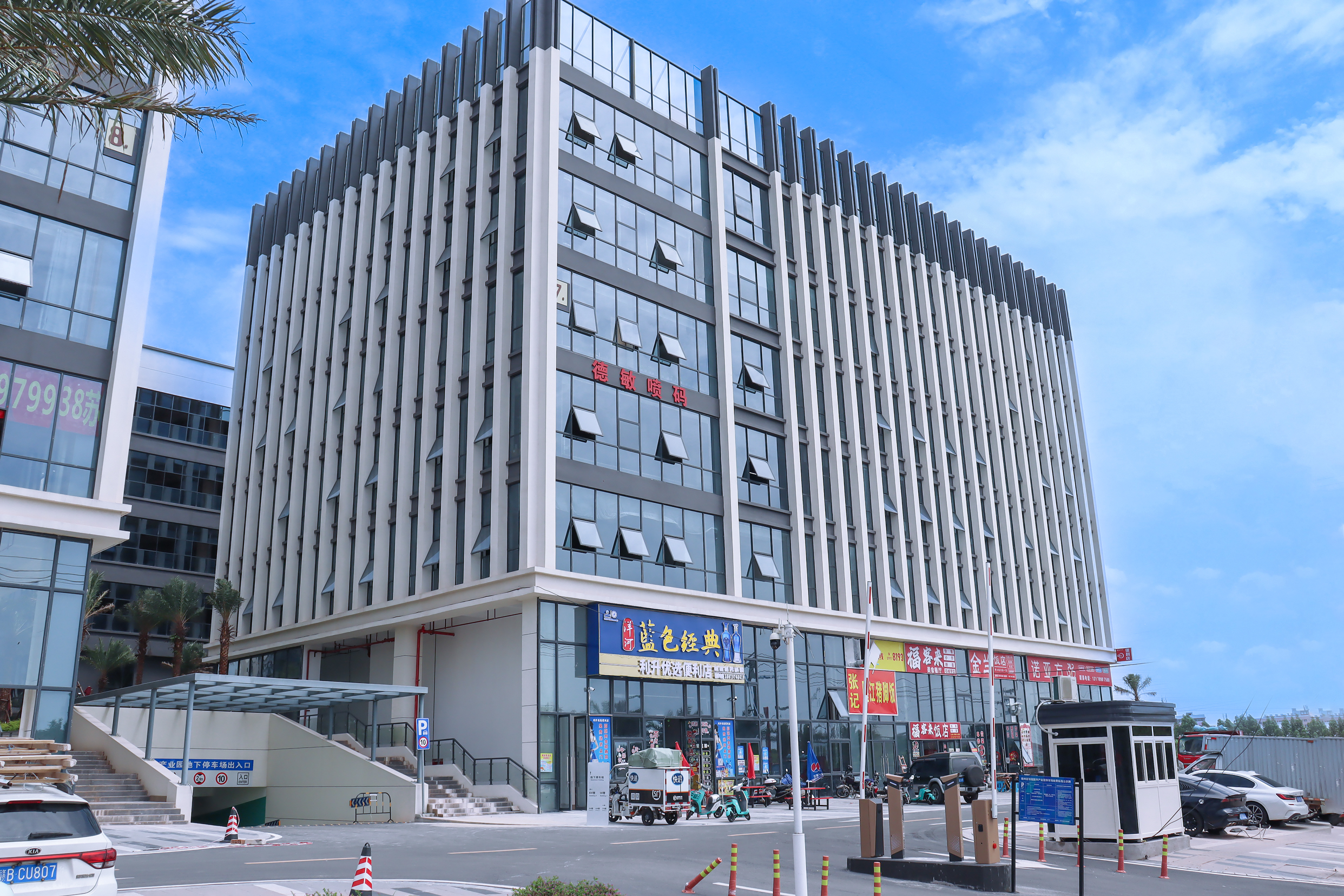
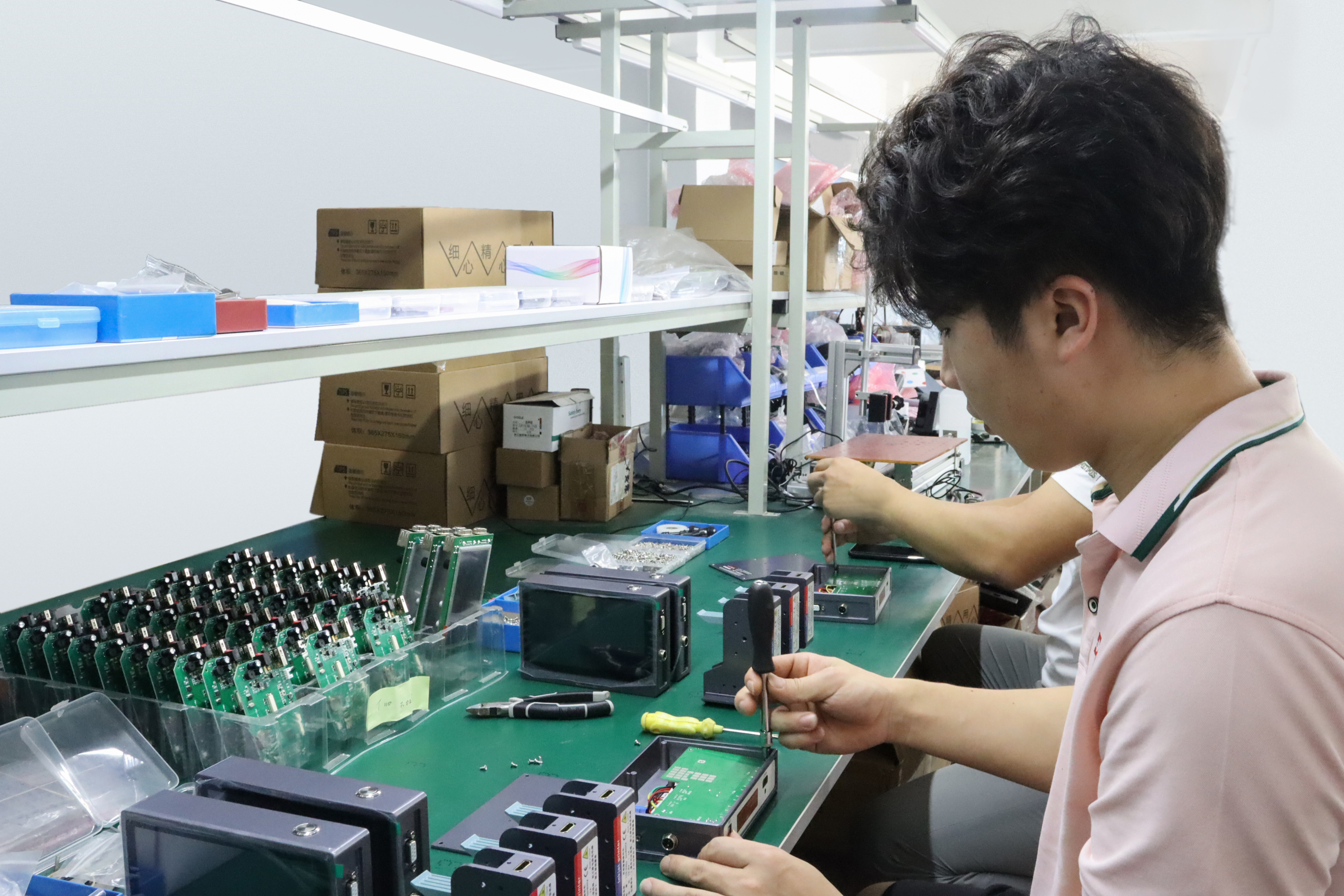
The first question is not what the supplier sells but what the supplier builds. DEMIN states that it is a specialized manufacturer of inkjet printers and related equipment in China, that all products are manufactured in-house, and that the company maintains its own R&D team to support customers. The company profile adds the measurable layer: a 3,000 m² factory, 150 employees, an annual output of 10,000 units, operations since 2017, and an export ratio of 50% across markets that include the United States, Germany, Brazil, Russia, Malaysia, Pakistan, Finland, Armenia and Senegal.
For a buyer, the useful evidence is not the claim but the trail behind it:
- Business licence address matched against the stated production site at Building 7, Digital Industry Park, Economic and Technological Development Zone, Ganzhou City, Jiangxi Province.
- A live or recorded walkthrough of assembly, testing, quality inspection and warehouse areas. DEMIN publishes factory, assembly, storage and R&D photographs that can be used as a starting point for that review.
- Quality management evidence. DEMIN holds ISO 9001 Quality Management System certification and describes full-process quality management with traceability covering raw materials, semi-finished goods and finished products.
- A named list of processes performed in-house, so outsourced steps are known rather than assumed.
A trading company can pass a catalogue test; it cannot pass a capacity and traceability test. That distinction is the single strongest predictor of whether the machine ships on the agreed date.
Check 2 — Documented Model Coverage
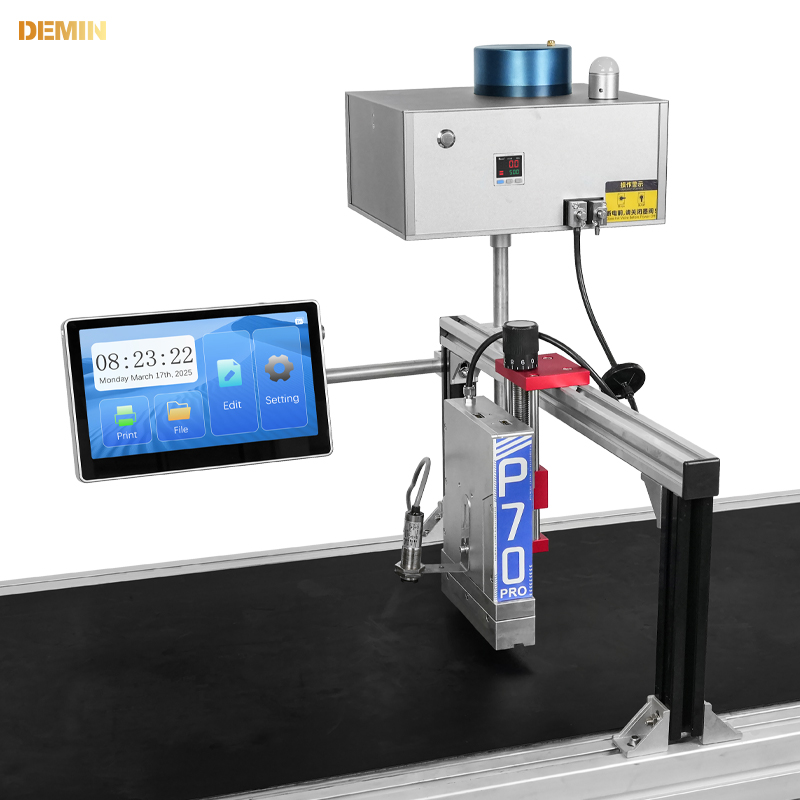
The second check converts a catalogue into a specification decision. DEMIN's range covers six models across three coding formats: two handheld units, two online units for production lines, and two piezoelectric UV models. Coverage matters for delivery assurance because a single manufacturer responsible for the whole range removes split responsibility between suppliers when a line uses more than one coding format.
| Model | Type | Print height | Print speed | Resolution | Documented interface |
|---|---|---|---|---|---|
| P70 Pro | UV / piezoelectric | 5–72 mm | 1–100 m/min | 360 dpi | RS232 / USB / DB9 / Ethernet (IP); Seiko 1020 printhead |
| P70 | UV / piezoelectric | 5–72 mm | 1–100 m/min | 180 dpi | RS232 / USB / DB9 / Ethernet (IP); Seiko 510 printhead |
| S10 | Online inkjet | 2–12.7 mm | 120 m/min | 300–600 dpi | DB9 sensor port and USB; 7-inch capacitive screen |
| L10 | Online inkjet | 2–12.7 mm | 120 m/min | 300–600 dpi | DB9 sensor port and USB; 7-inch capacitive screen |
| M10 | Handheld | 2–25.4 mm | 60 m/min | 300–600 dpi | 3.5 mm sensor port and USB; 4.3-inch capacitive screen |
| H50 | Handheld | 2–50 mm | 60 m/min | 300 dpi | Not listed in the current data sheet; 5-inch capacitive screen |
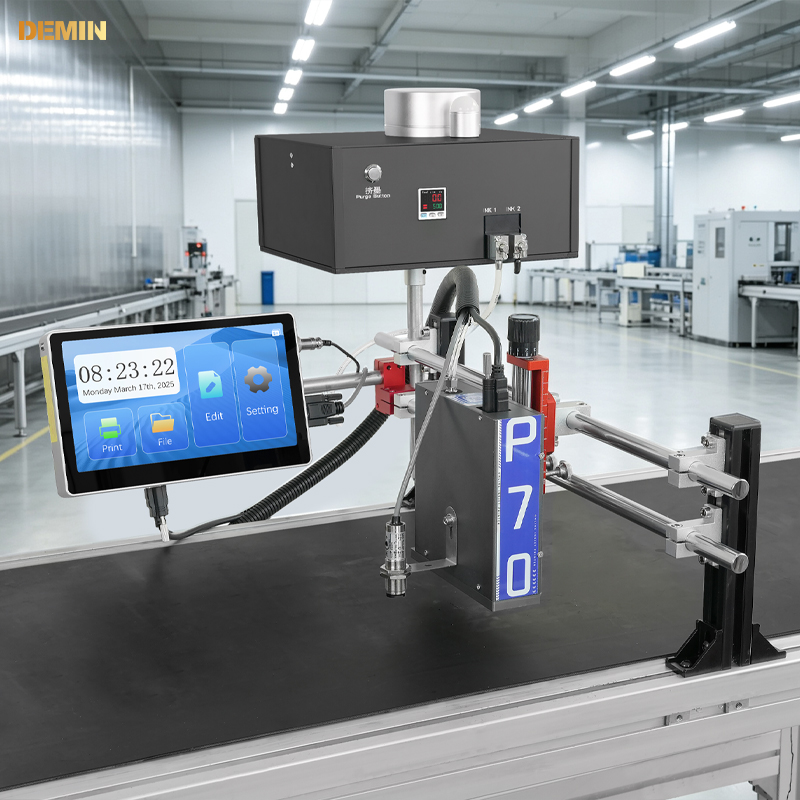
Two details deserve attention during evaluation. First, the published specifications for S10 and L10 are identical in the current data set — 3.5 kg, 300–600 dpi, 2–12.7 mm print height, 120 m/min, cast aluminium alloy body, 7-inch capacitive touchscreen, DC16.8V 3A, DB9 sensor and USB interfaces — so a buyer should ask the supplier to state the model-specific difference rather than infer one from a price tier. Second, the H50 data sheet does not list external interfaces while the L10, S10, M10 and both piezoelectric models do; any line-integration project should confirm the interface set on the exact model quoted.
Print height is the specification that most often disqualifies a model late in the process. The P70 series reaches 72 mm for large-character work on boards and cartons, the H50 covers 2–50 mm for handheld large-character marking, the M10 covers 2–25.4 mm, and the online S10 and L10 are designed around 2–12.7 mm for date, batch and variable-data coding.
Check 3 — Warranty and After-Sales in Writing
DEMIN states a 12-month warranty together with lifelong after-sales service. For procurement, the duration matters less than its definition, because warranty language is where delivery assurance is either secured or quietly lost. Five items should be settled in the contract rather than in correspondence:
- Start date. Shipment date, delivery date and commissioning date produce very different coverage windows on a project with installation lead time.
- Covered scope. Which components fall inside the warranty and which are consumables. Ink cartridges and printheads need explicit treatment.
- Service route. Who performs service — the factory team or a local distributor — and through which channel and language.
- Spare parts and consumables continuity. DEMIN's models use single-colour printing with six standard ink colours: red, yellow, blue, green, black and white, with an invisible ink option also listed in the model data sheets. Because cartridges are replaceable items, consumable supply is a continuity question in its own right.
- Escalation path for line-critical failures. A named technical contact and a stated response sequence are more useful than a general promise of support.
After-sales claims should also be tested against the export footprint. A supplier shipping to Europe, the Americas and Asia at a 50% export ratio has usually developed a repeatable support process; a supplier with no export history has not yet been tested by time zones and language differences.
Check 4 — The R&D Team as a Long-Term Support Resource
The fourth check looks past the first shipment. DEMIN maintains a 45-person R&D team, holds National High-Tech Enterprise status, and lists independent patents and software copyrights among its qualifications. The company also reports honours such as Excellent Industrial Manufacturer and Integrity Demonstration Enterprise. Self-developed software appears in the product data as well: the L10 and S10 are described as running a self-developed operating system, and the P70 Pro is offered with bulk OEM customisation.
For a multi-year supply agreement, R&D capacity is what covers the work that occurs after installation: interface and firmware adjustments, language additions across the 29–30 languages supported by the range, custom fixtures for an unusual line geometry, and ink-to-substrate matching for difficult materials. On integration, the P70 series offers RS232, USB, DB9 and Ethernet ports, while the online S10 and L10 expose a DB9 sensor interface and USB — a specification a buyer can check against the line control system before ordering rather than after.
R&D headcount is not a capability proof on its own. Ask instead for the interface documentation of the quoted model, one or two examples of customisation work already delivered, and the name of the engineer who will handle integration questions during commissioning. A supplier that cannot name that person before the order will struggle to name one after it.
A Six-Step Supplier Evaluation Workflow
The four checks are most reliable when they run in a fixed order, because each step narrows what the next one needs to test.
- Define the coding task first. DEMIN lists printing content, working environment, printing speed and substrate material as the four factors that determine which inkjet coder fits a line. A supplier evaluation launched before those four are written down produces incomparable quotations.
- Request model-level data sheets, not catalogue pages. Map print height, speed, resolution and interface against the task. On the DEMIN range this immediately separates 2–12.7 mm online coding from 5–72 mm large-character work.
- Verify factory status. Match documents to the production site, request a walkthrough, and confirm which processes are performed in-house and which are not.
- Write the warranty into the contract. Fix the start date, the covered scope, the service route, the consumable supply plan and the escalation contact in the same document.
- Validate on your own substrate. DEMIN states that its printers can print on carton, plastic, metal, glass, wood and woven fabric, among other materials. That list is a starting point for qualification, not a guarantee of adhesion on a specific coating, so confirm which test printing the supplier can provide and under what conditions before a bulk order.
- Commit technical support to the agreement. Name the contact, define the response route, and state the scope of customisation covered by the supply relationship.
Where This Framework Changes the Answer
Carton and packaging lines. A corrugated carton operation that prints labels and brand information runs the configuration described earlier: photoelectric sensor triggering, continuous online printing, UV curing, high-temperature workshop conditions and high-adhesion ink on corrugated board. Here the P70 or P70 Pro covers 5–72 mm print height at 1–100 m/min, while the online S10 or L10 covers 2–12.7 mm at 120 m/min for date and batch work. The evaluation question is not which machine prints faster but which supplier can support the sensor, curing and ink combination on site.
Food, beverage and medical packaging. Date coding, batch numbers, serial numbers, QR codes and barcodes are the dominant tasks, and the supplier's value lies in consistent variable-data output plus consumable continuity. Single-colour printing with six standard ink colours covers most of this work; buyers needing full-colour graphics should recognise that these models are not positioned for it.
Warehouse and logistics marking. Where coding happens at the goods rather than on a line, the handheld format applies: the M10 at 520 g with 2–25.4 mm print height for light, frequent use, and the H50 at 950 g with 2–50 mm for larger characters on cartons. Delivery assurance here means battery and cartridge availability, not line integration.
Evidence Matrix: What to Request and What It Proves
The table below converts the four checks into a request list that can be sent to any inkjet printer supplier. It is deliberately document-based, because documents can be compared across suppliers while assurances cannot.
| Verification item | Document to request | What it confirms | Warning sign |
|---|---|---|---|
| Factory status | Business licence with production address, ISO 9001 certificate, walkthrough recording | In-house manufacturing and traceable quality management | Address mismatch or refusal to show the assembly area |
| Capacity | Employee count, factory area, annual output statement | Ability to hold a delivery schedule | Catalogue-only answers with no capacity figures |
| Model coverage | Model-level data sheet per quoted unit | Print height, speed, resolution and interface fit | Category claims without model specifications |
| Warranty | Written clause stating 12 months, start date and covered scope | Cost and risk allocation after commissioning | Verbal warranty or undefined start date |
| Consumables | Ink colour list, cartridge specification, reorder route | Continuity of coding output | No stated consumable supply plan |
| R&D support | Named technical contact, interface documentation, customisation examples | Post-installation capability | Customisation promised with no examples or owner |
Frequently Asked Questions
Is DEMIN a factory or a trading company?
Quanzhou Demin Spraying Code Technology Co., Ltd. is a specialised manufacturer of inkjet printers and related equipment in China. All products are manufactured in-house, and the company maintains its own R&D team to support customers. The factory is listed at 3,000 m² with 150 employees and an annual output of 10,000 units, operating since 2017.
What warranty and after-sales service is included with DEMIN inkjet printers?
DEMIN provides a 12-month warranty together with lifelong after-sales service. For procurement purposes, the warranty should be confirmed in the contract with a defined start date, a defined covered scope including printheads and ink cartridges, a named service route, and an escalation contact for line-critical failures.
Which models cover handheld marking and online production-line coding?
The range covers both formats. Handheld models are the M10 (520 g, 2–25.4 mm print height, 300–600 dpi, 60 m/min) and the H50 (950 g, 2–50 mm, 300 dpi, 60 m/min). Online models are the S10 and L10 (2–12.7 mm, 300–600 dpi, 120 m/min, DB9 sensor and USB interfaces). Large-character and UV work is covered by the P70 and P70 Pro piezoelectric models at 5–72 mm and 1–100 m/min.
What materials can these inkjet printers print on, and how many colours are available?
DEMIN states that its printers can print on carton, plastic, metal, glass, wood, woven fabric and other materials. Printing is single-colour, with six standard ink colours available: red, yellow, blue, green, black and white, plus an invisible option listed in the model data sheets. Because adhesion depends on the specific coating and workshop conditions, buyers should confirm test printing on their own substrate before a bulk order.
What should a buyer confirm before signing a long-term inkjet printer supply agreement?
Four items decide whether the agreement holds: the printing content, working environment, printing speed and substrate material that define the coding task; the model-level specification of the quoted unit; the written warranty and consumable supply route; and the named technical contact backed by the supplier's R&D team. Buyers who want to review the full product and factory documentation before that conversation can download the DEMIN Inkjet company brochure and send specific model questions to the contact below.
Conclusion: Evaluate the Supplier Before the Specification
Delivery assurance in industrial inkjet printer sourcing is built from evidence rather than promises. In-house factory status determines whether the build schedule is controlled; documented model coverage determines whether the specification survives commissioning; a defined 12-month warranty with lifelong after-sales service determines what happens on the first failure; and a 45-person R&D team determines whether the equipment can still be supported three years after installation. Buyers who verify those four points before requesting a quotation compare suppliers on continuity instead of unit price, which is the only comparison that reflects how the printer will actually be used.
Next step for procurement teams
Send your coding task — printing content, line speed, substrate and workshop environment — and request the model-level data sheet, warranty terms and technical contact for the unit you are evaluating.
Email: 605004505@qq.com | WhatsApp / Tel: +86 17859391129
Website: www.dminkjet.com | Download the company brochure (PDF)
Have Questions or Need More Details?
Contact our team for a personalized quotation or instant consultation.
Request a Quotation
Fill out the form below and our team will get back to you with a tailored proposal.
WhatsApp Direct Chat
Prefer to chat in real-time? Message us on WhatsApp for instant assistance & quick answers.
- Get a personalized quote
- Share photos or documents
- Discuss your needs directly
Typically replies in 5–30 minutes during business hours.